

0 items £0.00
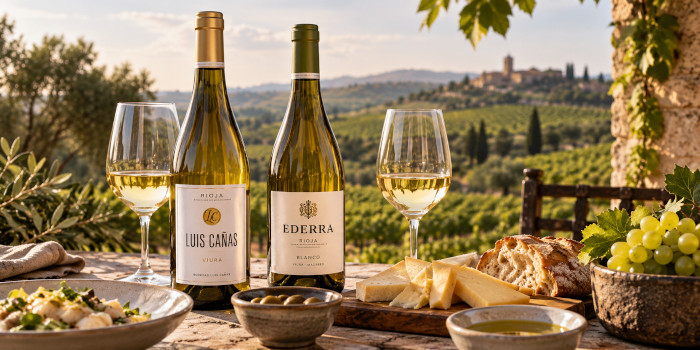
Try two wines made from Viura and you might reasonably wonder whether they were made from the same grape.
One can be fresh, bright and fruit-led, with citrus, apple and floral flavours. Another can be broader and more textured. Barrel fermentation or ageing can take the grape somewhere different again, producing richer wines with creamy, toasted and spicy characteristics. Some Viura wines are made to drink young, while others can develop considerably with age.
And then there is Macabeo. Despite the different name, Macabeo and Viura are the same grape, and as Macabeo it also plays an important role in Spanish sparkling wine.
That makes Viura unusually difficult to understand from the grape name alone. The useful question isn't simply “What does Viura taste like?” but “How has this particular Viura been made?”
At its freshest, Viura can produce lively white wines with citrus, apple and other orchard-fruit flavours, sometimes accompanied by floral notes and a clean, refreshing finish.
Those characteristics provide a useful starting point, but they don't define every Viura. The grape can also develop considerably more texture, richness and complexity depending on the vineyard, blending, winemaking and maturation.
This is why describing Viura with a single list of flavours can be misleading. With this grape, understanding the way the wine has been made can be just as useful as knowing the variety itself.
Viura has the useful ability to work with rather than fight against different approaches in the winery.
When made simply and protected from excessive oxidation or oak influence, it can retain freshness and fruit and produce approachable young white wines. Winemakers can also build greater texture through techniques such as lees contact, or use barrel fermentation and maturation to introduce another layer of richness and complexity.
Ageing can take the wine further still.
So rather than thinking of Viura as having one fixed style, it is more useful to think about several broad expressions of the grape.
If you enjoy clean, refreshing white wines, this is probably the most straightforward place to begin.
Here the emphasis is generally on freshness, citrus and orchard fruit rather than obvious oak. These wines can be bright and approachable, allowing the fruit and acidity to provide most of the drinking experience.
This expression is particularly useful if you like Spanish whites but don't necessarily want a rich or heavily oaked wine.
It also demonstrates why saying that Viura is naturally buttery or oaky gets the grape backwards. Those characteristics can occur in Viura wines, but they are largely consequences of how particular wines have been made rather than requirements of the grape itself.
Between a simple fresh white and an obviously barrel-shaped wine lies a large amount of territory.
Vineyard selection, vine age, blending and time on the lees can all help create wines with greater weight and texture while retaining the freshness that makes the wine balanced.
This can be an interesting part of Viura's spectrum if you find very light whites a little too simple but don't necessarily want obvious vanilla, toast or other flavours associated with oak.
The distinction matters because more complex does not automatically mean more oaky.
Oak provides one of Viura's most distinctive transformations.
Barrel fermentation and maturation can introduce creamy texture and flavours such as toast, vanilla and spice alongside the grape's fruit. The resulting wine can feel considerably broader and richer than a youthful, fruit-led Viura.
For customers who enjoy fuller white wines, this can be one of Viura's most interesting expressions.
But oak is a choice, not a definition of the grape. If you prefer fresher whites without obvious oak influence, that doesn't mean Viura isn't for you – it simply tells us which expression of Viura is more likely to suit you.
Yes, and this is another reason the grape is difficult to reduce to one simple style.
Viura has a particularly important history of ageing in Rioja. Wines intended for development can gain additional texture, complexity and more mature savoury characteristics through time in barrel and bottle.
That creates quite a contrast with young Viura designed primarily around freshness and immediate fruit.
You therefore shouldn't assume that choosing Viura automatically means choosing a young, simple white wine. The grape can be used for wines intended for very different stages of their lives.
Viura is Rioja's principal traditional white grape and consequently appears across many different expressions of white Rioja.
That makes the region an excellent demonstration of the grape's versatility. Within Rioja you can encounter fresh young whites, more textured wines, barrel-fermented styles and wines made with longer maturation in mind.
Viura can be used on its own or alongside other permitted white varieties, so seeing Viura on a wine doesn't necessarily mean the finished wine is 100% Viura.
If your interest has now become specifically “Which style of white Rioja should I choose?”, that is a different decision. Our White Rioja Style Guide explores that choice in more detail.
Yes. Viura and Macabeo are two names for the same grape variety.
Viura is the name most strongly associated with Rioja, while Macabeo is widely encountered elsewhere in Spain and in other wine regions.
This is useful to know because a customer who has enjoyed Viura may already have encountered Macabeo without realising it – and vice versa.
The different names don't mean the wines should taste identical. Once again, region, vineyard, blending and winemaking can have an enormous influence on what ends up in your glass.
The same grape also has an important role in Cava, where Macabeo is one of the traditional varieties used for sparkling wine.
There it commonly works alongside other grapes and contributes to a wine whose character is also shaped by blending and the sparkling-wine production method.
We don't need to treat still Viura and Cava as though they are the same drinking decision. What matters here is understanding just how adaptable the grape is.
If you know Macabeo principally through sparkling wine, a still Viura or Macabeo provides an opportunity to explore another side of the same variety.
Your existing preferences can help identify which expression is worth exploring first.
Look towards younger, fruit-led Viura where citrus, orchard fruit and freshness are more important than obvious oak. You don't need to move into richer white Rioja simply because Viura is capable of making it.
Look for wines where lees ageing, older vines, vineyard character or blending help build greater texture and complexity without making oak the dominant feature.
This is where Viura can become dramatically different. Barrel fermentation or maturation can create a broader, creamier and more complex wine with toast, vanilla and spice joining the fruit.
Viura's ability to develop with age opens another route. More mature examples can move away from straightforward youthful fruit towards greater complexity, texture and savoury character.
You may already know Viura very well without having consciously chosen the grape. Exploring Viura itself can help explain why different white Riojas you've tried have provided such different drinking experiences.
Viura is particularly interesting if you enjoy discovering how winemaking can change the expression of a grape.
Its attraction isn't that every Viura delivers one unmistakable flavour profile. It is almost the opposite: freshness and relatively restrained fruit give winemakers room to create markedly different styles.
That means a preference for fresh whites doesn't exclude you from Viura, and neither does a preference for richer, more complex wines. The important decision is which expression of the grape you want to explore.
If you now have an idea of the style that interests you, the next step is to choose between the wines themselves.
Our Viura collection includes different expressions of the grape, from fresher white wines through more textured examples to wines shaped by barrel fermentation and maturation.
Browse our Viura wine collection.
If understanding Viura has helped you decide that it is specifically white Rioja you want to explore, your decision has moved from grape to region and style.
Our White Rioja Style Guide can help you understand the different styles available and decide which direction to take.
You can also browse our White Rioja collection if you already know enough to start choosing between the wines.
If you know what sort of white wine you normally enjoy but aren't sure which Viura to try, get in touch or visit us in the shop.
Tell us whether you prefer fresh and fruit-led, textured, barrel-fermented or richer mature whites, and we'll help you find a Viura that makes sense for you.
| Why Choose Izadi Wines? |
| Why Choose Bodegas Manzanos Wines? |
| White Rioja Style Guide – Which White Rioja Is Right for You? |