

0 items £0.00
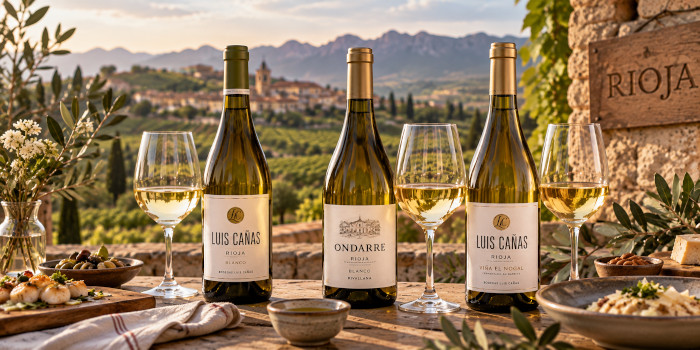
Mention Rioja and most people immediately think of red wine. But White Rioja can be every bit as interesting – and considerably more varied than you might expect.
Some are bright, fresh and fruit-led, with citrus, apple and stone-fruit flavours. Others have more texture and complexity without tasting obviously oaky. At the richer end are barrel-fermented and matured wines where creaminess, toast, vanilla and spice can become an important part of the experience.
So there isn't one flavour that tells you what White Rioja tastes like.
The more useful question is what sort of white wine do you enjoy?
If you already know what you're looking for, you don't need to understand every grape or winemaking technique before choosing a wine.
Look towards White Rioja where fresh fruit, acidity and the character of the grapes take the lead rather than obvious barrel influence.
Expect flavours such as citrus, apple, peach and other orchard or stone fruits, sometimes with floral or mineral notes.
Explore our non-barrel-fermented White Rioja collection.
This is where White Rioja becomes particularly interesting.
Lees ageing, older vines, grape selection, blending and careful maturation can all add texture and complexity without necessarily making a wine taste strongly of oak.
If that sounds like what you're looking for but you aren't sure which direction to take, keep reading. We'll explain what creates those differences.
If you enjoy fuller white wines with creamy texture, toast, vanilla, spice or other flavours associated with oak, barrel-fermented White Rioja is a natural place to explore.
The best examples retain enough freshness to balance that additional richness rather than simply tasting heavy.
Explore our barrel-fermented White Rioja collection.
White Rioja isn't defined by a single grape or a single method of winemaking.
Producers can choose between several permitted white grape varieties and can use different vineyards, blends, fermentation vessels, lees ageing, barrels and maturation to shape their wines.
That creates an unusually broad range of drinking experiences within the same region.
A fresh young White Rioja and a richer barrel-fermented example can therefore share the same regional name while tasting dramatically different.
Understanding those differences is much more useful than trying to learn one supposedly typical flavour for White Rioja.
For many customers, this is the easiest introduction to White Rioja.
These wines place freshness and fruit towards the centre of the drinking experience. Citrus, apple, peach and other orchard or stone-fruit flavours are common, sometimes accompanied by floral, tropical or mineral notes depending on the grapes and wine.
The intention isn't necessarily to make the simplest White Rioja. It is to make a wine where freshness, fruit and balance matter more than obvious barrel character.
That makes this part of the category particularly useful if you normally enjoy crisp Spanish whites or simply want a refreshing alternative to richer, oak-influenced styles.
Browse non-barrel-fermented White Rioja.
There is a large and important space between a straightforward fresh white and a wine dominated by barrel character.
Winemakers can build texture and complexity in several ways. Older vines and particular vineyard sites can change the concentration and character of the fruit. Blending different grape varieties can alter aroma, acidity, weight and texture. Time on the lees can give a wine greater breadth and creaminess.
Oak itself doesn't necessarily have to dominate either. A wine can encounter barrel during fermentation or maturation while retaining plenty of freshness and only subtle oak character.
This is why choosing White Rioja purely by asking “oak or no oak?” can sometimes be too simplistic.
If you want a white with more substance and interest but don't particularly want strong vanilla or toasted flavours, there are White Riojas capable of occupying that middle ground.
Barrel fermentation is one of White Rioja's most distinctive traditions.
Fermenting wine in barrel rather than simply putting finished wine into oak can change both flavour and texture. Combined with subsequent maturation and lees contact, it can create broader, creamier wines where fruit is joined by characteristics such as toast, vanilla and spice.
These wines can be an excellent choice if you normally enjoy richer, more complex whites.
Customers who enjoy barrel-fermented Chardonnay, for example, may find familiar qualities in the combination of fruit, texture and oak – although White Rioja should be explored as its own wine rather than treated as an imitation of Chardonnay.
Browse barrel-fermented White Rioja.
No, although Viura is Rioja's predominant traditional white grape and remains enormously important to the region.
Rioja permits several other white varieties, including Garnacha Blanca, Tempranillo Blanco, Malvasía, Maturana Blanca, Turruntés, Chardonnay, Sauvignon Blanc and Verdejo.
Those grapes can provide producers with additional ways of shaping aroma, fruit, acidity, body and texture, either individually or as part of a blend.
This means you don't usually need to choose White Rioja by grape variety before you can choose by drinking style.
If you've encountered Viura and want to understand why wines made from that particular grape can themselves taste remarkably different, our Viura & Macabeo Wine Guide explores the grape in more detail.
No.
This is an important distinction because knowing that a wine has encountered oak doesn't tell you how strongly that oak will affect the finished wine.
The type and age of the barrel, how long the wine spends there, whether fermentation itself takes place in barrel, the amount of lees contact and the character of the fruit can all influence the result.
One White Rioja might show obvious creaminess, toast and vanilla. Another can retain citrus and mineral freshness while oak contributes mainly texture and complexity.
So if you've previously found heavily oaked whites overpowering, that doesn't automatically rule out every White Rioja that has spent time in barrel.
Yes. Although plenty of White Rioja is made to be enjoyed for its youthful freshness, the category also has a long tradition of producing whites capable of developing through maturation.
Viura's acidity can provide a particularly useful foundation for ageing, while barrel maturation and time in bottle can move the wine away from straightforward youthful fruit towards greater texture, complexity and more mature savoury characteristics.
This doesn't mean older is automatically better.
A young, vibrant White Rioja and a mature, complex one are answering different customer preferences. Age is another way of shaping style rather than a quality ladder that everyone needs to climb.
Rioja's ageing classifications aren't restricted to red wine. White wines can also qualify for the region's recognised ageing categories when they meet the appropriate requirements.
But you don't need to begin your White Rioja journey by memorising those classifications.
If your immediate question is simply “Which sort of White Rioja will I enjoy?”, freshness, texture, richness and oak influence are usually more useful starting points.
If the Rioja ageing system itself is what interests you, our Rioja Crianza, Reserva & Gran Reserva Guide explains how the classifications work.
It depends which Chardonnay you enjoy.
If richer, barrel-fermented Chardonnay is your preference, the fuller and more oak-influenced side of White Rioja may provide the most natural place to begin. You can find similar ideas of fruit, creaminess, texture and barrel complexity without expecting the wines themselves to taste identical.
If you prefer fresher, unoaked Chardonnay, that tells us something different: start with White Rioja where freshness and fruit lead instead.
The useful information isn't simply “I drink Chardonnay”. It is what you enjoy about the Chardonnay you drink.
If freshness, citrus and lively acidity are what attract you to Sauvignon Blanc or other crisp white wines, begin at the fresher end of White Rioja.
You don't need White Rioja to reproduce Sauvignon Blanc's distinctive aromatic character. Your existing preference simply tells us that a bright, fruit-led Rioja with limited obvious oak is probably a more sensible starting point than the richest barrel-fermented example.
Then White Rioja is worth exploring on its own terms.
The two colours share a region and some winemaking traditions, but White Rioja isn't simply a white version of the familiar Rioja red.
Starting with the style of white wine you already enjoy is usually more useful than trying to translate your favourite Crianza or Reserva directly into a white equivalent.
However, if part of what you enjoy about Rioja is the way producers use maturation and oak to build complexity, the richer and more mature side of White Rioja may be particularly interesting.
You want fruit, freshness and acidity to lead, without barrel character becoming an important part of the wine.
Explore non-barrel-fermented White Rioja.
You still value freshness, but you want something with a little more substance, texture or complexity. Grape choice, old vines, lees contact, blending and subtle barrel influence can all play a part.
If you're not certain which wine fits that description, continue to our complete collection rather than forcing your preference into the wrong technical category.
Browse our complete White Rioja collection.
You enjoy fuller white wines and want barrel fermentation or maturation to contribute noticeably to texture, richness and flavour.
Explore barrel-fermented White Rioja.
You are interested in the way White Rioja can develop beyond youthful fruit, gaining additional texture and more complex mature characteristics.
This preference isn't completely captured by a simple barrel/non-barrel division, so our complete White Rioja collection is the better place to continue choosing.
Explore our White Rioja collection.
If you now know roughly what you're looking for, you don't need to narrow your choice any further before looking at the wines.
Our White Rioja collection brings the different expressions together, allowing you to compare fresh and fruit-led wines with more textured, complex and barrel-influenced styles.
Browse our complete White Rioja collection.
If you're still unsure, get in touch or visit us in the shop.
You don't need to know the grape varieties, ageing classifications or winemaking terminology. Tell us what sort of white wine you normally enjoy – fresh and crisp, fuller and textured, rich and creamy, subtly oaked or something more mature and complex – and we'll help you find a White Rioja that makes sense for you.
| Why Choose Izadi Wines? |
| Why Choose Bodegas Manzanos Wines? |
| White Rioja Style Guide – Which White Rioja Is Right for You? |