

0 items £0.00
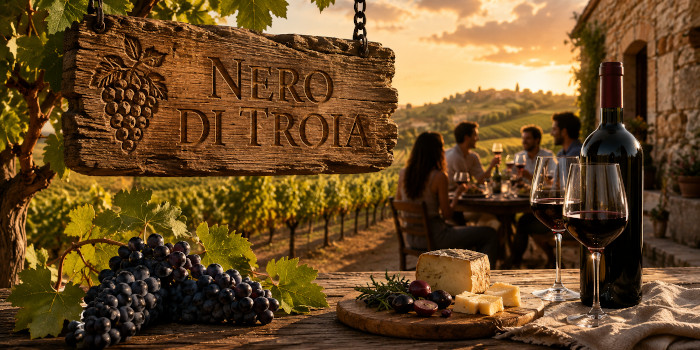
If you enjoy structured reds such as Rioja, Malbec or Cabernet Sauvignon but want something less familiar, Nero di Troia may suit you very well.
It typically combines ripe cherry, blackberry and plum with floral, spicy and savoury notes, and usually feels drier, firmer and fresher than Primitivo.
This guide will help you decide whether Nero di Troia suits your taste, how it compares with wines you may already know and what makes this distinctive Puglian grape worth exploring.
You will probably enjoy Nero di Troia if you...
✓ Like medium to full-bodied red wines
✓ Enjoy ripe fruit balanced by freshness and tannin
✓ Prefer dry reds to very soft, sweetly fruited styles
✓ Like Rioja, Malbec, Cabernet Sauvignon or structured Italian reds
✓ Want a red wine that works particularly well with food
✓ Enjoy discovering grapes that are not widely known
If that sounds like you, Nero di Troia is a very good style to explore.
If you're interested but still unsure, keep reading. We'll show you how Nero di Troia differs from Primitivo, Negroamaro, Rioja and Malbec, and explain what gives the grape its firmer, fresher character.
Merchant's Tip
Nero di Troia is a particularly good next step if you enjoy Primitivo but want a drier wine with more structure, freshness and savoury character.
| Typical flavours | Cherry, blackberry, plum, violet, pepper, liquorice and gentle earthy notes |
| Body | Medium to full-bodied |
| Tannins | Moderate to firm |
| Acidity | Moderate, giving enough freshness to balance the ripe fruit |
| Sweetness | Normally dry |
| Good with | Roast meat, grilled meat, tomato-based pasta, mushrooms and mature cheese |
The most useful way to understand Nero di Troia is to compare it with wines you may already know.
| If You Usually Drink... | Choose Nero di Troia If... | Choose the Other Wine If... |
|---|---|---|
| Primitivo | You want a drier, fresher wine with firmer structure and more savoury detail. | You prefer maximum softness, richness and sweetly ripe fruit. |
| Negroamaro | You want brighter fruit, more floral character and firmer structure. | You prefer earthier flavours, dried herbs and a more distinctly savoury finish. |
| Rioja | You want a structured red with ripe fruit and less emphasis on vanilla, cedar and prolonged oak ageing. | You particularly enjoy the mature oak flavours and softer character of traditionally aged Rioja. |
| Malbec | You want ripe dark fruit with more freshness, firmer structure and distinctly Italian savoury character. | You prefer softer texture, fuller dark fruit and greater immediate richness. |
Merchant's Tip
If you usually drink Rioja or Malbec, Nero di Troia can be a reassuring introduction to a lesser-known Italian grape: the structure feels familiar, while the flavour remains distinctly Puglian.
Nero di Troia combines ripe southern Italian fruit with more freshness and tannic structure than many customers expect from a Puglian red.
Cherry, blackberry and plum give the wine plenty of fruit, but its acidity and tannins provide shape and a drier impression on the palate. Floral, peppery, earthy and sometimes liquorice-like notes can add another layer beyond the fruit.
That balance is the key to understanding the grape. Nero di Troia can still taste generous and ripe, but it doesn't rely on softness or richness alone. The freshness and structure become part of its character, particularly alongside food.
Nero di Troia can range from relatively youthful, fruit-led reds to more structured and mature expressions, but its combination of ripe fruit, freshness and tannin should remain recognisable.
Younger examples tend to emphasise cherry, blackberry and plum, often with violet, pepper and gentle savoury notes. The fruit can be generous, but the grape's natural freshness and tannin usually give it more definition than a particularly soft, ripe red.
This is a good direction if you want to discover Nero di Troia through its fruit and freshness rather than through oak or mature flavours.
With greater concentration or maturation, Nero di Troia can become deeper and more complex. Oak may add spice, tobacco, cedar or chocolate, while time can soften the tannins and bring the fruit and savoury flavours together.
These wines can suit customers who enjoy more structured, developed reds, particularly with substantial food. Even in a richer style, however, Nero di Troia should retain enough freshness and shape to avoid feeling simply heavy.
Merchant's Tip
Don't assume that the richer or more mature style is automatically the better Nero di Troia. Choose a younger style when freshness and fruit appeal most; look towards greater maturity when you want more depth, softer tannins and complexity.
Is Nero di Troia dry?
Usually. Nero di Troia is most commonly encountered as a dry red wine. Its ripe cherry, blackberry and plum flavours can be generous, but it generally feels drier on the palate than a particularly ripe, soft Primitivo.
Is Nero di Troia smooth?
It can be, particularly when its tannins are ripe or the wine has had time to mature. However, Nero di Troia normally has more firmness and structure than a very soft red, so smoothness should not be confused with a lack of tannin.
Is Nero di Troia tannic?
Usually moderately to firmly so. Tannin is an important part of the grape's structure, but in a balanced wine it should give shape rather than simply making the wine feel harsh or drying.
Is Nero di Troia fruity?
Yes. Cherry, blackberry and plum are typical, but floral, spicy, earthy and liquorice-like notes can make the wine feel more complex than a purely fruit-driven red.
Is Nero di Troia heavy?
Not necessarily. It can be medium to full-bodied and quite concentrated, but its acidity and tannin provide freshness and shape. That can make it feel less soft and heavy than some richer Puglian reds.
Is Nero di Troia good with food?
Very much so. Its combination of ripe fruit, freshness and tannin makes it particularly useful with roast or grilled meat, tomato-based dishes, mushrooms and mature cheese.
Nero di Troia is particularly comfortable at the table because its ripe fruit is supported by enough freshness and tannin to work with substantial, savoury food.
Particularly good matches include:
✓ Roast lamb or beef
✓ Steak and grilled meat
✓ Slow-cooked beef, lamb or pork
✓ Sausages and meatballs
✓ Tomato-based pasta
✓ Pizza with meat, mushrooms or olives
✓ Aubergine, lentils and roasted vegetables
✓ Mushroom dishes
✓ Mature hard cheeses
Protein and fat can soften the impression of the wine's tannins, while its ripe fruit works naturally with roasted meat and rich tomato sauces. Its freshness also helps when a dish is substantial enough to make a softer, richer red feel heavy.
Very delicate fish, light salads and mildly flavoured dishes are less natural matches because the wine's fruit and structure can overwhelm them.
Merchant's Tip
Choose Nero di Troia for meals where Primitivo might feel a little too soft or rich. Its firmer structure and freshness make it particularly useful with roast meat, tomato sauces and mature cheese.
If you're starting with the food rather than the grape, our Puglia food guide can help you choose a wine for your meal.
Choose Nero di Troia if you enjoy ripe, dark-fruited reds but also value freshness, structure and a dry, savoury finish.
It is particularly worth exploring if you already enjoy Rioja, Malbec, Cabernet Sauvignon or structured Italian reds and would like to discover something less familiar. Nero di Troia still gives you generous southern Italian fruit, but its firmer tannins and freshness give the wine shape and make it particularly comfortable alongside food.
If you like the ripe fruit of Puglian reds but would prefer something softer, richer and more immediately generous, our Primitivo guide may point you in a better direction.
If you like the idea of a dry Puglian red but would prefer something earthier, more herbal and traditionally savoury, our Negroamaro guide may suit you better.
If Nero di Troia sounds right, you can see the Nero di Troia wine we currently have available.