

1 items £44.00
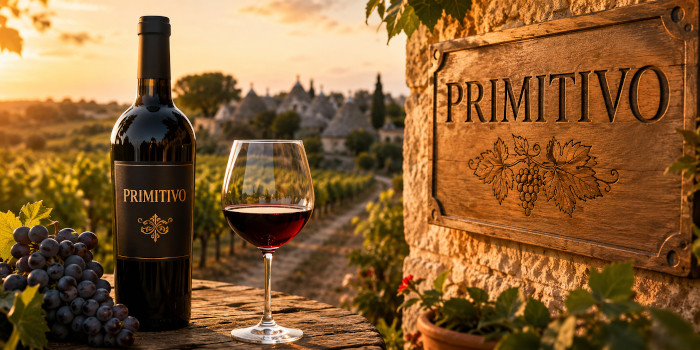
Primitivo is best known for producing the smooth, ripe and generously fruity red wines of southern Italy. But that isn't the only way to enjoy it. Primitivo can also make fresh, elegant rosé, giving you two very different expressions of the same grape.
So before deciding whether Primitivo suits you, there's a more useful question to answer first: are you looking for red wine or rosé?
If you're looking for the style Primitivo is famous for — ripe blackberry, plum and dark cherry fruit, a smooth texture and generally soft tannins — continue with our guide to choosing red Primitivo ↓.
Primitivo can produce a completely different style when made as rosé. Instead of richness and dark fruit, expect something lighter and fresher, with red-berry fruit and considerably more delicacy.
We currently stock one Primitivo rosé, San Marzano Tramari. It is fresh and elegant, with cherry and raspberry fruit, subtle Mediterranean herbs and a lightly saline finish.
Explore our Puglia rosé and see whether Tramari is right for you.
The easiest distinction is the drinking experience you're looking for. Choose red Primitivo when you want ripe fruit, softness, warmth and a generous red wine. Choose Primitivo rosé when you want freshness, red-berry fruit and something lighter and more refreshing.
If you're still unsure, continue with the guide. We'll start with the much broader world of red Primitivo, then explore the grape in more depth as we go.
Red Primitivo could be worth exploring if you:
✓ Usually ask for a smooth red
✓ Prefer ripe fruit to earthy flavours
✓ Enjoy rich wines without harsh tannins
✓ Want something generous and easy to like
✓ Often buy Malbec, Merlot, Shiraz or softer Rioja
You don't need to recognise yourself in everything on this list. If even one or two of these sound appealing, there's a good chance that red Primitivo is worth exploring.
Merchant's Tip
We often recommend red Primitivo when a customer simply asks for “a really smooth red”. Its combination of ripe fruit and soft tannins makes it immediately approachable, even for people who haven't tried the grape before.
If it does, browse our Primitivo collection and use our recommendations to choose the style that suits you.
If you're interested but want to understand Primitivo better before choosing, continue with the guide.
If nothing there sounds like the kind of red wine you enjoy, that's useful too. We can help you explore some alternatives later in the guide.
Typical flavours: Blackberry, plum, dark cherry, dried fruit and sweet spice.
Body: Usually medium to full-bodied.
Tannins: Generally soft and rounded.
Acidity: Moderate, although the best examples retain enough freshness to balance their richness.
Sweetness: Normally dry, despite its ripe and sometimes jammy fruit flavours.
Best for: Relaxed evening drinking, barbecues, pizza, rich pasta dishes, roast meat and generous comfort food.
If it does, you know enough to start choosing. Browse our Primitivo wines and use our recommendations to find the style that suits you.
If you're interested but still have questions about Primitivo, keep reading. One of the most common is whether such a ripe, fruity wine is actually sweet.
Primitivo often tastes sweeter than it actually is.
Most Primitivo customers encounter is dry, although sweetness levels can vary between styles. Its impression of sweetness often comes from very ripe grapes, intense fruit flavour, soft tannins and, in some examples, warming alcohol or oak-derived notes of vanilla and spice.
This distinction matters when choosing a bottle. Someone who enjoys ripe, smooth reds may love Primitivo even if they would never normally choose a genuinely sweet wine.
However, not every Primitivo is especially rich or jammy. Vineyard location, ripeness, winemaking and alcohol level can produce styles ranging from fresh and straightforward to dense and powerful.
Merchant's Tip
If you like the idea of Primitivo but don't want its richest or ripest expression, don't rule the grape out. A fresher standard Primitivo may suit you much better than a powerful Primitivo di Manduria or Riserva.
If you now know that you want either a fresher Primitivo or one of its richer styles, our Primitivo collection will help you choose between the wines we stock.
If you still have questions, keep reading for some quick answers about Primitivo.
Is Primitivo smooth?
Usually, yes. Soft tannins and ripe fruit are among its main attractions.
Is Primitivo dry?
Yes, in most cases, even when the fruit tastes very ripe and sweet.
Is Primitivo heavy?
Not always. Everyday examples can be rounded and easy drinking, while Primitivo di Manduria and Riserva wines are often richer and more powerful.
Is Primitivo fruity?
Very. Blackberry, plum and dark cherry are among its most typical flavours.
Is Primitivo high in alcohol?
It can be, particularly in richer styles made from very ripe grapes.
Is Primitivo good value?
Very often. Puglia can deliver generous flavour and concentration at prices that compare favourably with many better-known Italian regions.
If that's given you the confidence you needed, browse our Primitivo wines and choose the style that suits you.
If you're wondering how Primitivo compares with wines you already know, keep reading.
If you already know the kind of red wine you enjoy, comparing Primitivo with something familiar can be one of the quickest ways to decide whether it is worth trying.
| If You Usually Drink... | Choose Primitivo If... | Choose the Other Wine If... |
|---|---|---|
| Malbec | You want a softer, riper and more rounded style. | You prefer firmer structure, fresher acidity or more pronounced tannins. |
| Merlot | You want more warmth, darker fruit and greater richness. | You prefer a gentler, less powerful red. |
| Rioja | You enjoy ripe fruit more than savoury oak and maturity. | You want developed flavours, firmer structure or more obvious oak ageing. |
| Shiraz | You want richness with less pepper and savoury spice. | You enjoy pepper, smoke, spice and a more powerful structure. |
| Negroamaro | You want a softer, riper and more fruit-driven wine. | You prefer a drier, more savoury finish with herbs and firmer structure. |
| Susumaniello | You want greater softness and immediate richness. | You prefer more freshness, darker fruit and a less familiar style. |
Merchant's Tip
Malbec drinkers often settle into Primitivo quickly because both styles offer generous dark fruit. Primitivo will usually feel softer and riper, while Malbec may provide more freshness and tannic structure.
If Primitivo sounds like the direction you want to take, browse our Primitivo wines and choose the bottle that suits you.
If the comparison has confirmed that another style suits you better, follow that preference rather than forcing yourself towards Primitivo. If you're still interested in Puglia, our Puglia Wine Buying Guide can help you find another direction.
If Primitivo still interests you but you're not yet sure which type to buy, keep reading. The next question is whether you want an everyday Primitivo, Primitivo di Manduria or a Riserva.
Once you've decided that red Primitivo suits you, the next question is how much richness, concentration and complexity you want. You don't need to understand every classification or bottle to make that choice.
Choose an everyday Primitivo when you want plenty of ripe fruit, a smooth texture and an easy-drinking red without unnecessary weight or complexity. This can be a particularly approachable starting point if you're new to the grape, and can also be the better choice for relaxed drinking or an ordinary midweek meal.
Look towards Primitivo di Manduria when you want greater richness and concentration. These wines are often fuller, warmer and more intensely fruity than standard regional Primitivo, making them particularly appealing with richer food or when you want the wine to play a bigger part in the occasion.
Choose Riserva when you're looking for greater maturity and complexity rather than simply more fruit. Ageing can bring more developed flavours, spice and additional texture, making these wines particularly suited to slower drinking, food and occasions when you want something more special.
Merchant's Tip
Moving up through these styles doesn't automatically mean buying a better wine. It means buying a different expression of Primitivo. For a relaxed evening, the freshness and simplicity of a good everyday bottle may be exactly what you want; spend more when the extra concentration, maturity or complexity will actually add something to the occasion.
If you've recognised the direction you want, the guide has done its job. Our Primitivo collection will help you choose between the bottles we stock.
If you're still curious about Primitivo rather than ready to choose, keep reading. There's more to the grape than the differences between the bottles on the shelf.
Primitivo is one of the grapes most closely associated with Puglia, the warm southern Italian region forming the heel of Italy. Its naturally generous fruit and ability to ripen successfully in the region's hot, dry conditions have helped make it one of Puglia's best-known wine styles.
But Primitivo isn't simply one kind of rich red wine. Where the grapes are grown, when they are picked and how the wine is made can all influence whether the finished wine is relatively fresh and straightforward or considerably richer, more concentrated and complex.
Puglia provides the warm, sunny conditions in which Primitivo can achieve the ripeness that gives the grape much of its familiar character. Ripe grapes can produce generous flavours of plum, blackberry and dark cherry, together with the rounded texture and warming feel many Primitivo drinkers enjoy.
That warmth also creates one of the challenges of making good Primitivo. Ripeness can bring richness and alcohol, so retaining enough freshness to keep the wine balanced matters. This helps explain why two Primitivos can share the same ripe-fruited character yet feel quite different in the glass.
Manduria, in southern Puglia, is particularly associated with Primitivo and gives its name to Primitivo di Manduria. Wines carrying the name come from a defined production area and must meet the requirements of the appellation rather than simply being any Primitivo made in Puglia.
For the customer, the useful distinction is that Primitivo di Manduria will often take you towards a richer, fuller and more concentrated expression of the grape. That doesn't mean every Manduria wine tastes the same, or that you should automatically prefer one to a simpler Primitivo. Producer, vineyard and winemaking choices still matter enormously.
If reading that has made you realise that the richer Manduria style is what you're looking for, our Primitivo collection will help you choose between the wines we stock.
Part of the answer lies in the grape itself and part in where it is grown. Primitivo ripens relatively early, and Puglia's warm climate can allow the grapes to accumulate plenty of sugar and flavour. That can translate into ripe fruit, generous body and relatively high alcohol in the finished wine.
The smoothness customers often associate with Primitivo isn't simply a result of ripeness, however. Vineyard decisions, extraction during winemaking, maturation and the use of oak can all influence texture. Producers can emphasise softness and immediate fruit or make wines with considerably more structure and ageing potential.
This is why “Primitivo” tells you something useful about a wine, but doesn't tell you everything about how it will taste.
Essentially, yes. Primitivo and California's Zinfandel are the same grape variety, sharing the same DNA profile, with their origins traced back to Croatia. The different names reflect their histories and the places in which they became established rather than two completely separate grape varieties.
That doesn't mean a bottle of Puglian Primitivo and Californian Zinfandel will necessarily taste alike. Climate, vineyards, ripeness and winemaking can produce very different expressions of the same grape. The connection is therefore useful for understanding Primitivo, but not a guarantee of a particular style.
The grape may be the same, but there are plenty of decisions between vineyard and bottle that affect what you eventually taste.
A relatively early harvest can help retain freshness, while riper grapes can give greater concentration, body and alcohol. Vineyard location and yields can influence fruit character and intensity, while choices in the winery affect extraction, texture and structure.
Ageing adds another layer. A youthful, fruit-led Primitivo may be made primarily to preserve its immediate blackberry, plum and cherry character. Other styles may spend longer maturing, sometimes with oak, developing additional flavours of spice, vanilla, chocolate, tobacco or dried fruit.
None of those approaches is automatically better. They simply explain why Primitivo can range from a soft, uncomplicated everyday red to a powerful wine intended for slower drinking and more serious occasions.
Merchant's Tip
Don't judge Primitivo from a single bottle. If your first experience feels too rich, too powerful or too simple, another expression of the grape may suit you much better. The useful question is often not just “Do I like Primitivo?” but “Which kind of Primitivo do I like?”
If understanding the grape has helped you recognise the style you want, return to our Primitivo collection and choose with that preference in mind.
If you're still enjoying learning about Primitivo, there's one very practical question left to explore: what should you eat with it?
Red Primitivo is particularly comfortable with generous, flavourful food. Its ripe fruit, rounded texture and generally soft tannins make it an easy partner for dishes with plenty of richness, while its darker fruit flavours work especially well with roasted, grilled and slow-cooked meats.
Barbecued and grilled meats are natural partners, particularly beef, pork, sausages and burgers. The wine's ripe fruit works well with caramelised and smoky flavours without adding aggressive tannins.
Rich pasta dishes are another good choice. Tomato-based sauces, ragù, meatballs and baked pasta all suit Primitivo's combination of fruit, warmth and softness.
Pizza works particularly well when the toppings have plenty of flavour — think pepperoni, spicy sausage, meatballs, mushrooms or roasted vegetables.
Slow-cooked and roasted meats can take you towards the richer end of Primitivo. Beef, lamb and hearty casseroles give Primitivo di Manduria and more mature styles enough flavour and richness to work against.
Mature and flavoursome cheeses can also be excellent, particularly when you're enjoying Primitivo on its own at the end of a meal.
Merchant's Tip
Match the weight of the Primitivo to the weight of the food. A softer everyday bottle is often all you need with pizza or pasta, while a richer Primitivo di Manduria or Riserva comes into its own when the dish becomes richer, slower cooked or more substantial.
If you've already decided on Primitivo, the suggestions above should give you plenty of useful starting points.
But if you're starting with the food and haven't yet decided which Puglian wine to serve, that's a different question. Use our Puglia Food Pairing Guide to choose a wine around the meal you're planning.
Primitivo earns its place in our range because it offers something many customers genuinely enjoy: ripe, generous fruit and a smooth, approachable texture without needing years of wine knowledge to appreciate it.
We particularly like the breadth behind that immediate appeal. Primitivo can be an easy, everyday red for pizza on a Tuesday evening, a richer Primitivo di Manduria for a slow-cooked dinner, or a mature Riserva worth opening when the wine itself is part of the occasion. And, as Primitivo rosé shows, the grape isn't confined to rich red wine at all.
It's a style we frequently recommend to customers who enjoy smooth, fruit-driven reds such as Malbec, Merlot or Shiraz but want to try something different. If that sounds like you, Primitivo is well worth exploring.
| Should You Buy Boccantino Wines? |
| Should You Buy Brunilde di Menzione Wines? |
| Should You Buy Produttori di Manduria Wines? |